Our story
The Water Around Us
Movement I — Imagine a fish
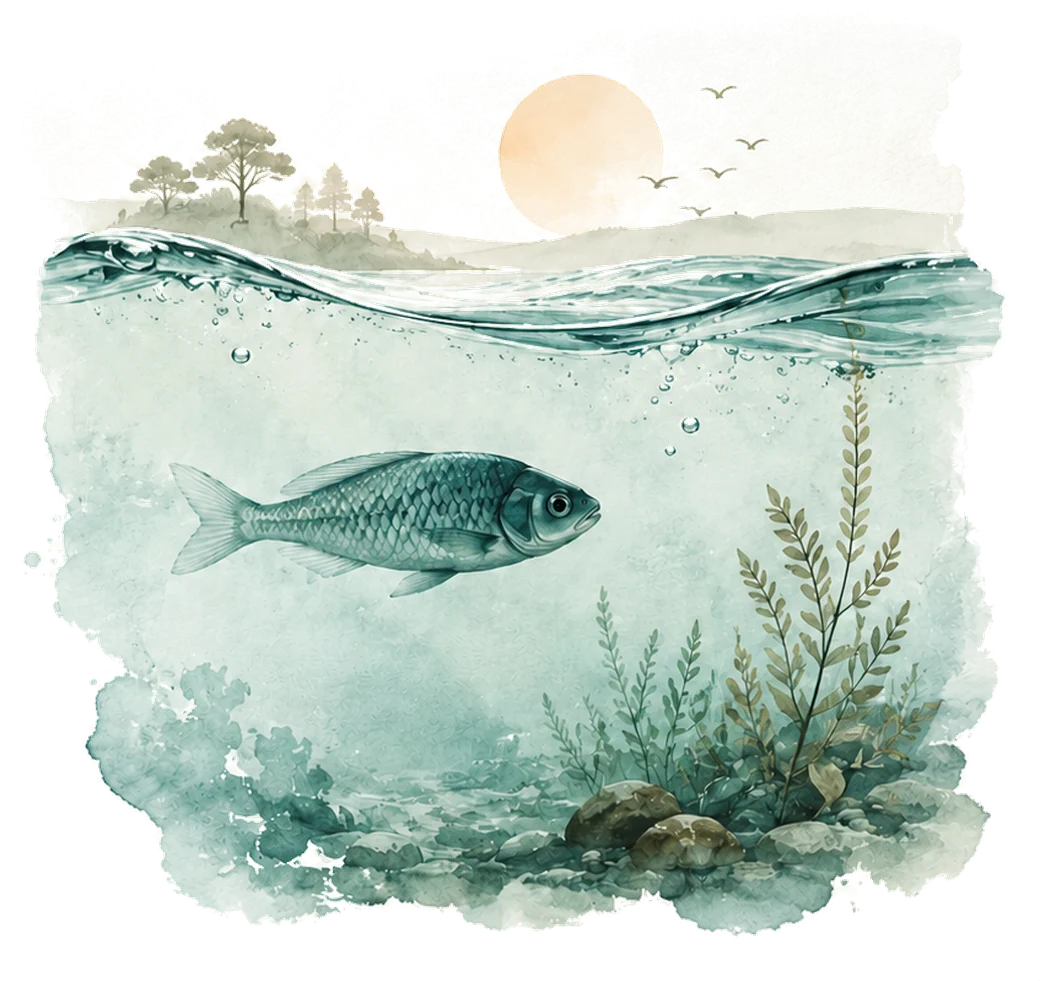
Imagine a fish struggling to swim.
The first instinct is to look at the fish.
What is wrong with it? Why is it not swimming properly? Why can it not simply try harder?
But perhaps we are looking in the wrong direction.
What is happening to the water?
Movement II — We do the same with people
We do the same thing with people.
A child falls behind in school. Why is the child not performing better?
A child goes quiet and withdrawn. Why do they not participate more?
A woman cannot take an opportunity. Why does she not have more confidence?
Someone is struggling emotionally. Why can they not simply cope?
We look at the individual. We analyse them. We assess them. We try to fix them.
We rarely look around them.
Movement III — No one grows alone
A child's ability to learn is shaped by whether they slept, whether they ate, and whether anyone at home has the time to help.
Their confidence is shaped by the people who describe them to themselves.
Their health is shaped by what is in the water and whether the school toilet works.
Their opportunities are shaped by systems they had no part in designing.
The water around us matters.

Movement IV — The question
So what if we stopped asking:
“What’s wrong with them?”
And started asking:
“What do they need to thrive?”
Because the problem is rarely a lack of potential.
More often, people are asked to grow in environments that were never designed to help them flourish.
Movement V — Why Aadyah exists
Aadyah was born from a different question.
What if we nurtured the water?
What if education supported more than academic performance?
What if a child had somewhere to put their fear, their anger and their ideas?
What if clean water, a working toilet and a meal were treated as part of education rather than as somebody else's problem?
What if we listened before assuming we knew what people needed?
What if wellbeing were part of ordinary development — not something we attended to only after things had gone wrong?
Movement VI — What nurturing the water means
At Aadyah, nurturing the water means creating environments where children have the opportunity to:
Holistic development is not about becoming the same. It is about having the opportunity to become more fully yourself.
Movement VII — Before we create solutions
Before we can nurture an environment, we have to understand the people living inside it.
And before we create solutions —
we must listen.
Movement VIII — Project Kahani
Project Kahani
सुनो, उनके मन की।
Suno, Unke Mann Ki.
Aadyah's initiative for listening to children, understanding what they carry, and building the conditions for their holistic development.
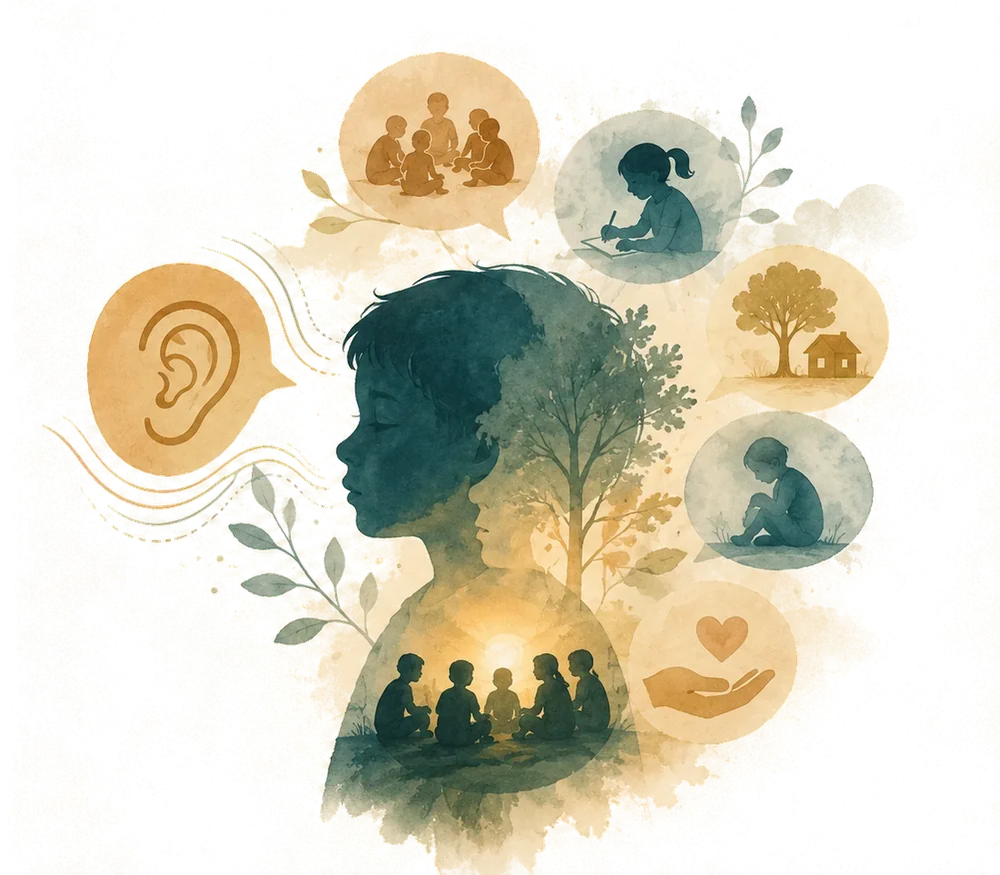
Every child carries a story.
Some are spoken loudly. Some sit behind silence. Some appear in the questions they ask, or in their drawings, or in the things they never say.
And sometimes, before a child needs to be taught — they simply need to be heard.
Movement IX — Back to the water
Because a child's story does not exist separately from the world around them.
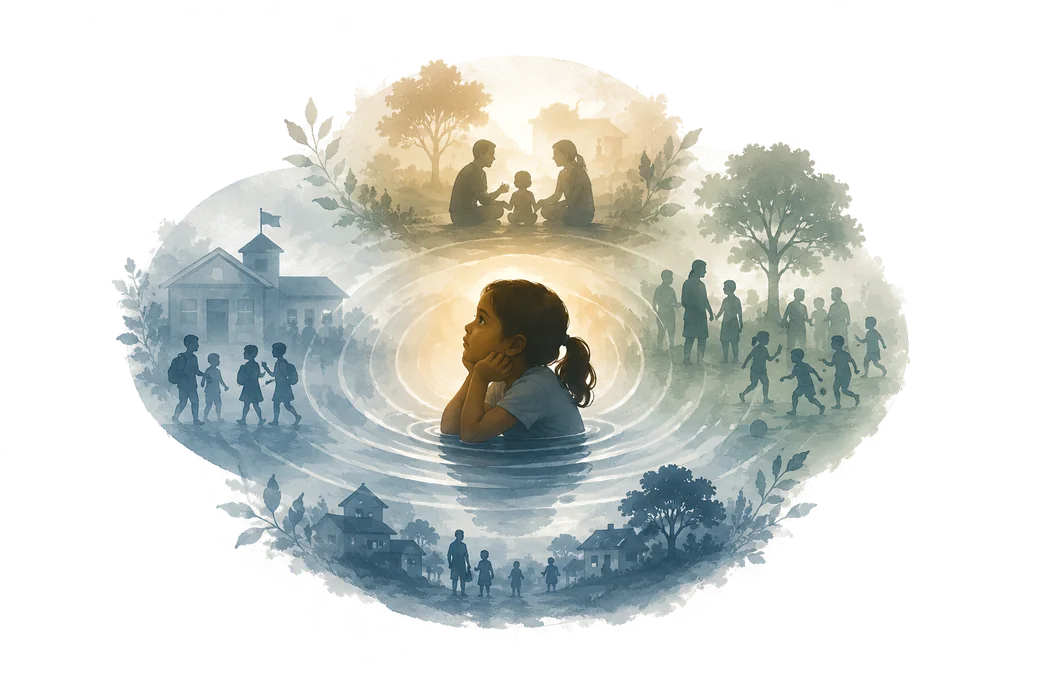
What they feel is shaped by home, school, relationships, community and society.
So when we listen to children, we do not only hear individual stories. We begin to understand the water around them.
We may not be able to change the entire ocean at once.
But we can begin by caring for the water around us.
And sometimes, that is where change begins.